Reading Out Loud
Focused Elements:
You can have these explanations read out loud by clicking on 'Speak Explanation' (access key 'a')
These controls are to provide alternative means of accessing the information on this page. Two main facilities are provided: adjusting the text size and listening to the text on the page.
1) Adjusting Text Size:
You can increase the text size by clicking on 'Larger' (access key '+'), and reduce it by clicking on 'Smaller' (access key '-'). You can reset the size back to its original value by clicking on 'Reset' (access key 'j')
2) Listening to the Text
You can adjust the pitch of the spoken word, the rate or speed of delivery and the volume. You can also choose the voice to use by clicking on the drop-down list. The default voice is whatever is the standard for the computer and browser you are using.
To set your default, please refer to the description in the Accessibility Statement.
There are normally three sections of text on the page that you can listen to: the headings, the main text and a selection. Click on 'Speak Headings to speak the page headings (access key 'l'). Click on 'Speak Main Text' (access key 'q') to listen to the main text.
You can also select an area of text in the page using standard select methods and click on 'Speak Selection' (access key 'w') to read the selection aloud.
You can enable the reading out loud of the element that currently has focus by clicking on 'Start Focus Speaking' (access key 'f') and you can stop this by clicking on 'Stop Focus Speaking' (access key 'd').
You can pause the audio by clicking on 'Pause' (access key 'r') and resume by clicking on 'Resume' (access key 't').
To cancel or stop the audio click on 'Cancel' (access key 'y'). To restart the current audio from the beginning, click on 'Restart' (access key 'k').
To hide the accessibility controls click on 'Hide Panel' (access key 'h')
To hide this explanation click on 'Hide Explanation' (access key 'x')
Widecombe-in-the-Moor
George Nosworthy in WW1


George Nosworthy's Life and War
"The Royal Naval Division (of which Plymouth Battalion was a part) should reinforce a fresh attack to be made that afternoon, 13th July, on such portions of our original objectives as remained in enemy hands. The second attack was a success...."
extract from Sir Ian Hamilton's Third Gallipoli Despatch. (Hamilton was commander in Chief Mediterranean Expedition Force.)
George Nosworthy was killed in action on 13th July 1915 aged 19.
George was born on 14 January 1897 at Venton Cottage, Widecombe in the Moor. His parents were James and Elizabeth Nosworthy. He lived at Venton with his brothers Richard and Ambrose and sisters Martha and Louie.
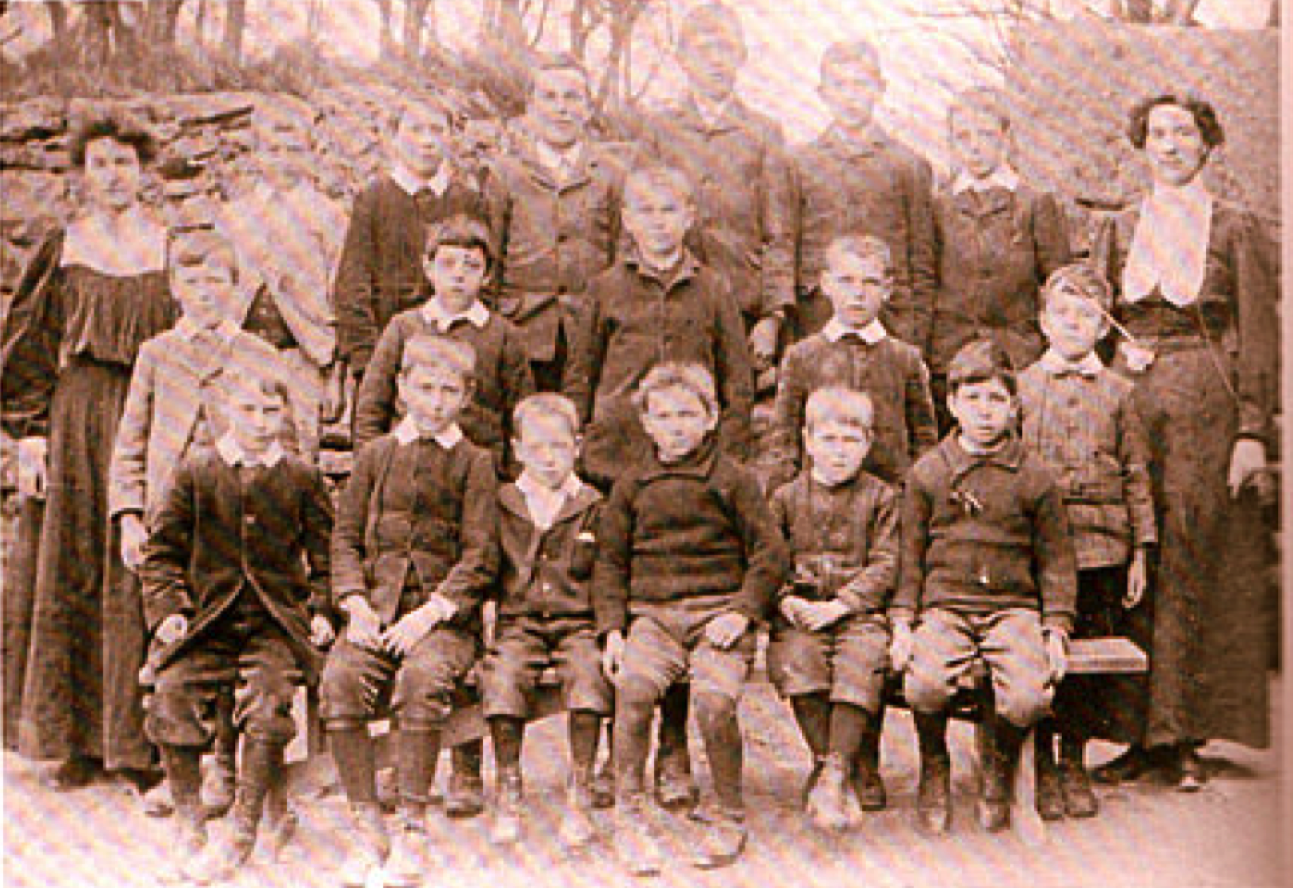
George attended Widecombe County Primary School (located at that time at the Church House) enrolling on 28 May 1901 and leaving 10 years later on 7 April 1911. George is on the back row on the left of this picture of Widecombe School Boys c 1907. During his time at school he would have been taught by Headmistresses Mrs Harriet Stanley and Mrs Carrie Bate (right of picture) together with assistant teacher Miss Willcocks (left of picture). It can be assumed when he left school George went labouring on local farms.
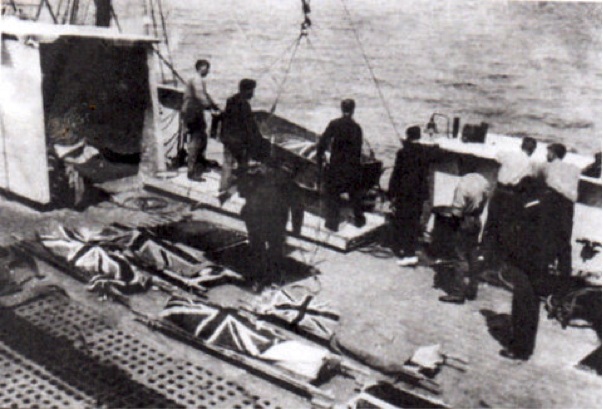
On the 25 May 1914, George Nosworthy went to Exeter to enlist in the Royal Marine Light Infantry, and was posted to the Plymouth Battalion. Following the declaration of war on 5 August 1914, the Plymouth Battalion of the Royal Marine Light Infantry were sent to Belgium to assist with the defence of Antwerp and Ostend. You can find more detail of what went on in the War Diaries of Private James Thompson who would have served with George Nosworthy (Extracted from the RMD DVD Issue 5 Pages 319 - 335). The fighting lasted from 19th September until the Marines returned to the United Kingdom on 12 October.
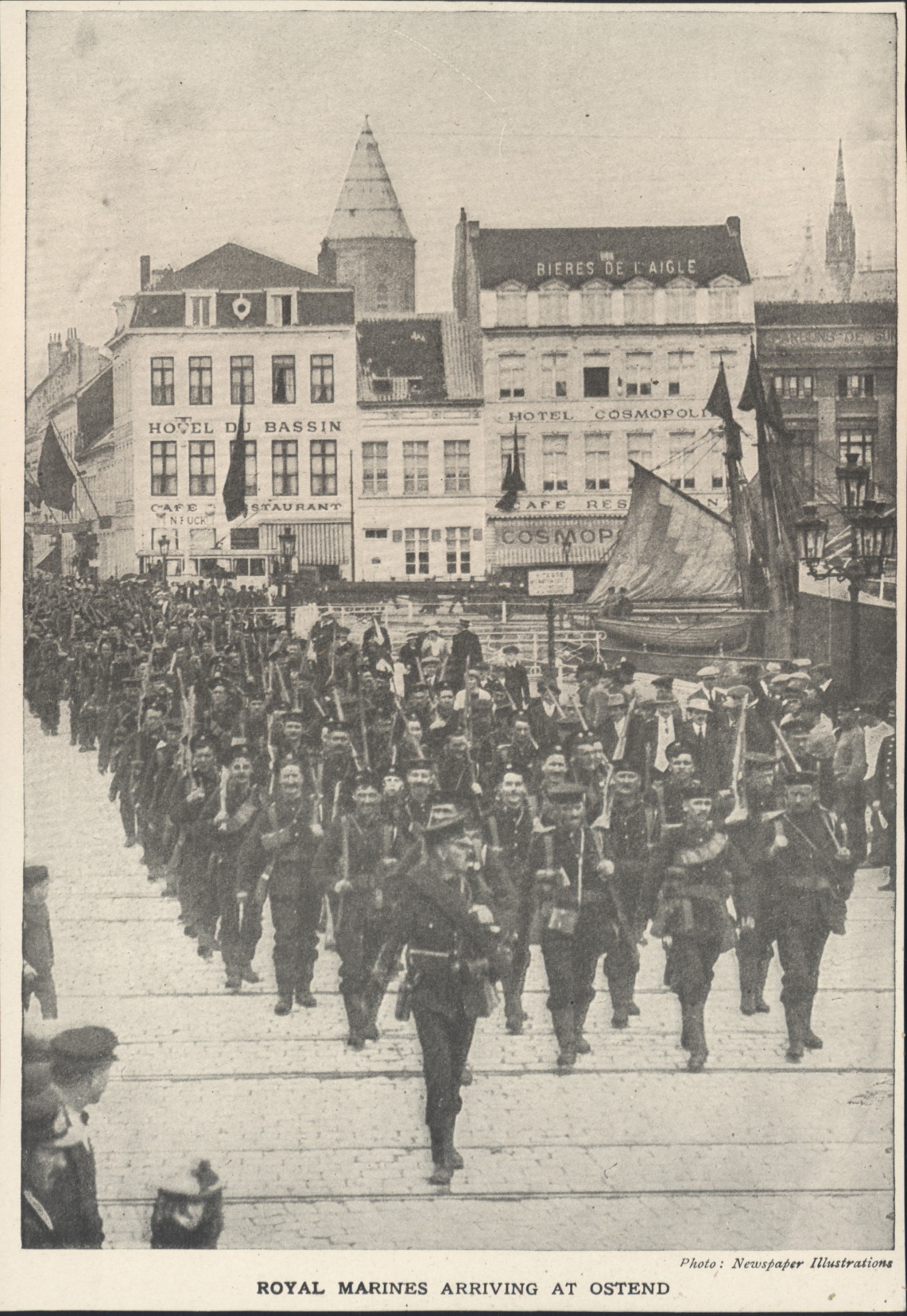
There are pictures here of the Marines entering Ostend and of the Marines building defences at Ostend (although these were only able to be used for a few hours before the position was abandoned and the Marines withdrawn.)
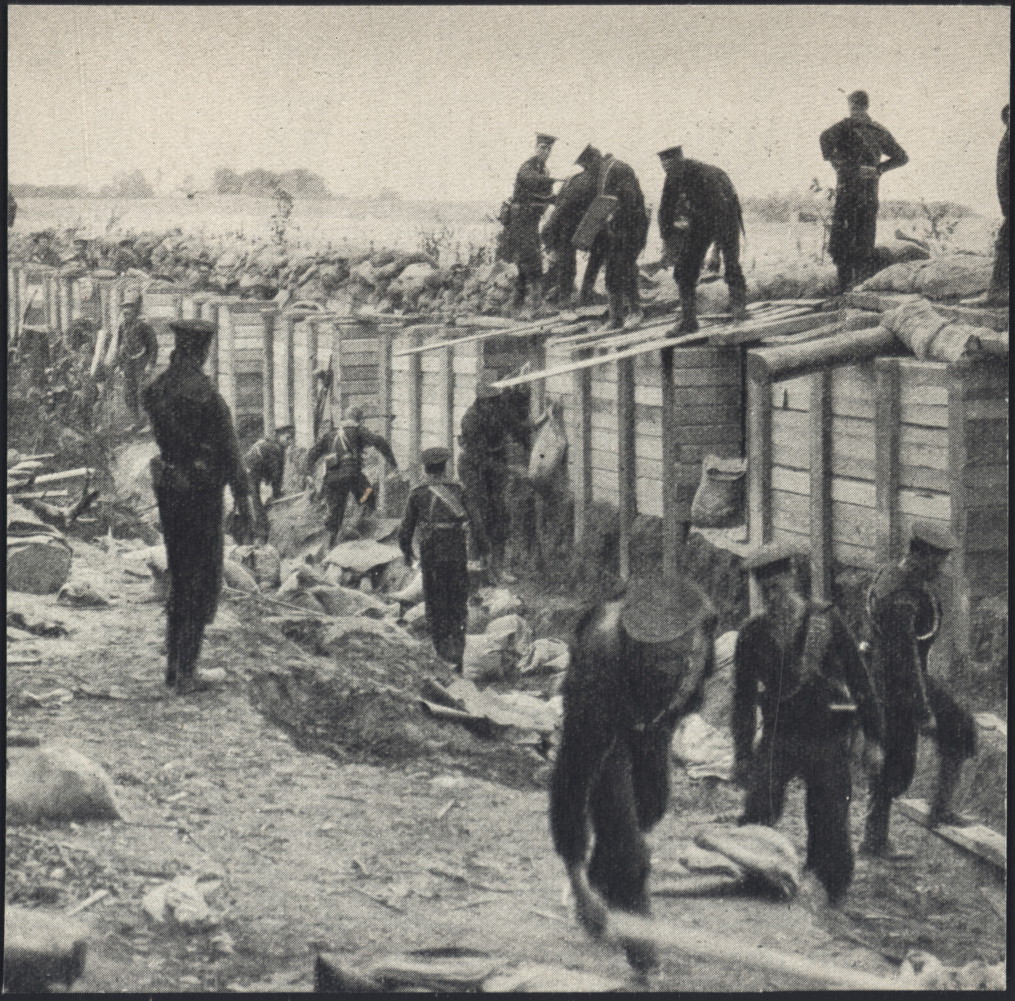 <
<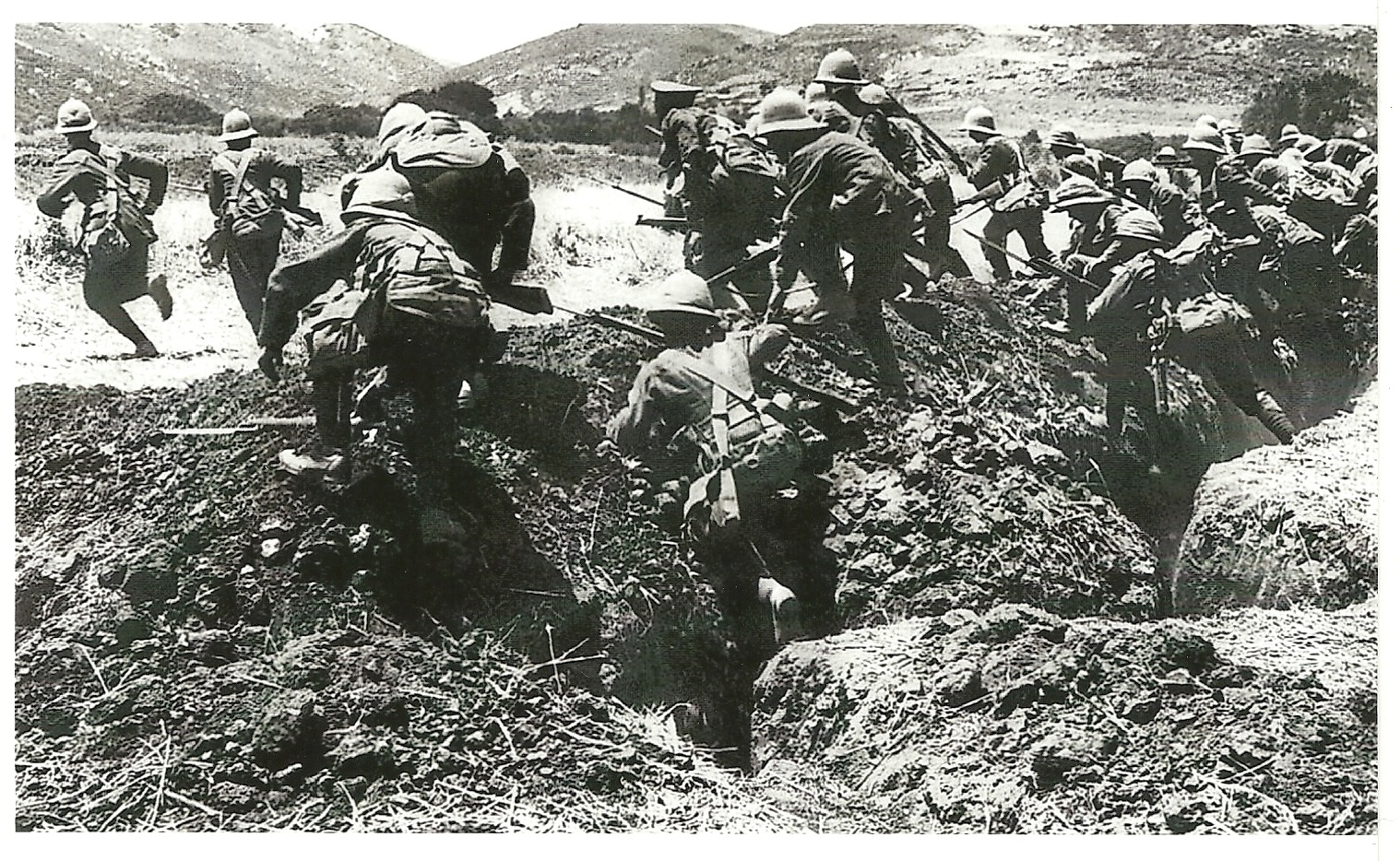
Following further training the Royal Marine Light Infantry (Plymouth and Chatham Battalions) sailed on February 6 1915 to Malta on HMT Braemar Castle (for more information see the RMD DVD Issue 19 pages 1885 - 1886), then on to Egypt to become part of the Mediterranean Expeditionary Force preparing for what became the Battle of Gallipoli in the Dardanelles. During this period the Marines undertook training for their future role in the forthcoming landings training on the Greek island of Lemnos (see picture left).
Following their training the Plymouth Battalion were ordered to assist the Naval Operations against Turkish held forts protecting the channel from the Aegean Sea to the Black Sea.
On March 4 the Plymouth Battalion landed at Sedd-al-Bahr (see map right) and Kum Kale to destroy the heavy guns and fortifications which had survived the Naval bombardment in the week prior to their landing. See Sergeant Meatyard's War Diary of the attack (Extracted from the RMD DVD Issue 19 pages 1870 - 1874).
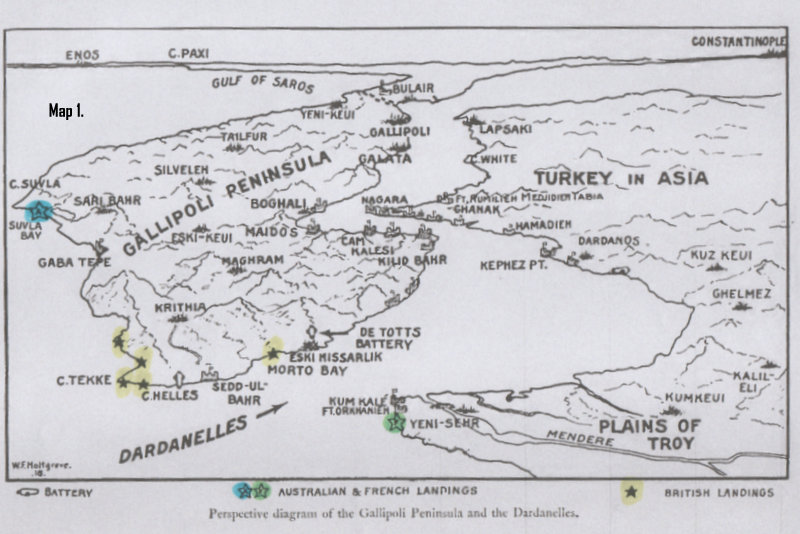
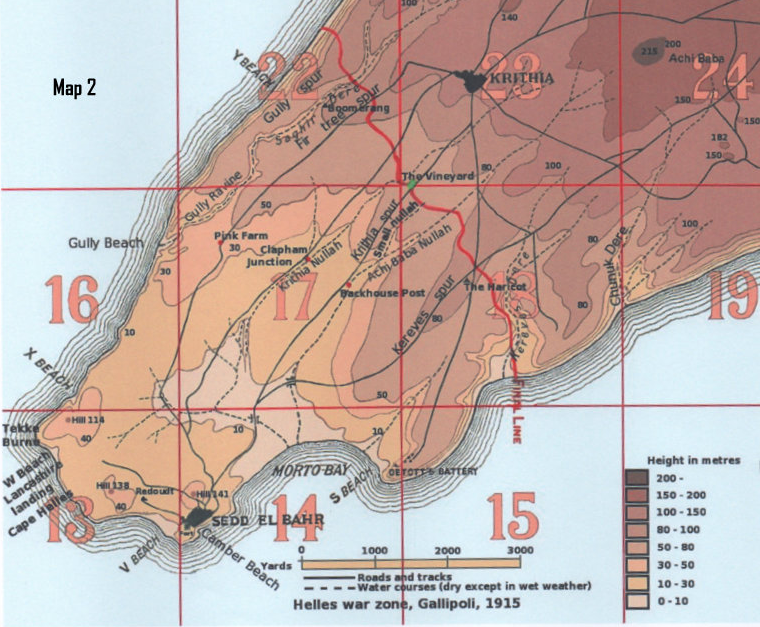
As part of the extensive assault launched by Allied forces on 25 April (known as Anzac Day), the Plymouth Battalion landed at Y beach (see map left) to support the 29th Division landings. Despite continuous fighting over the following two months the breakthrough sought was not obtained. See the Private Vickers War Diary of the landing at Y beach (Extracted from the RMD DVD Issue 19 pages 1881 - 1883).
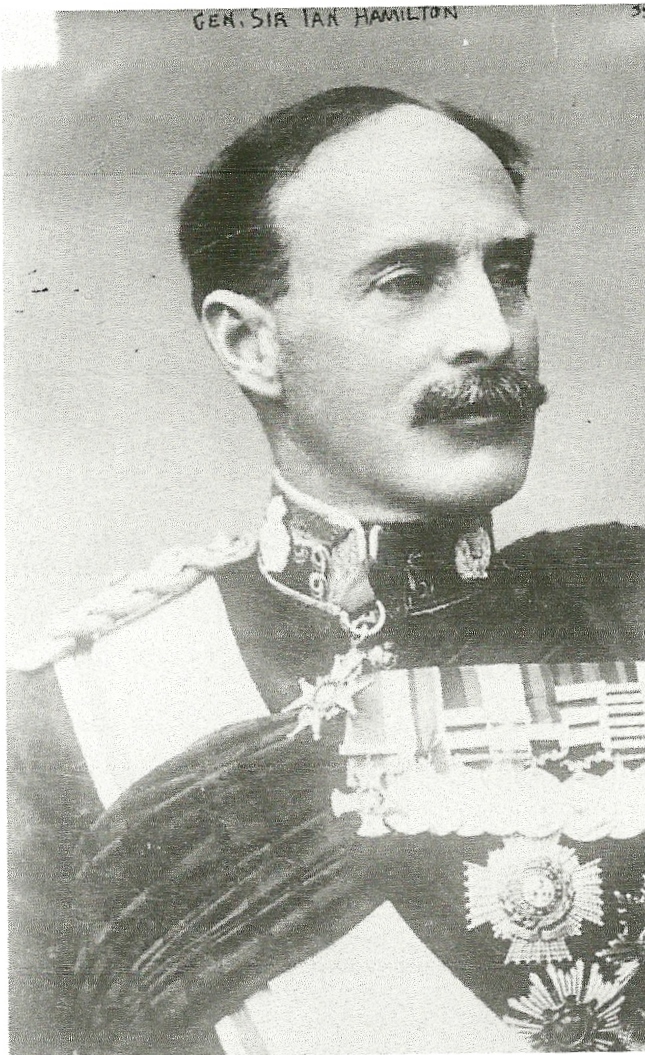
Finally, on 13th July a fresh attack was made and was successful (see Sir Ian Hamilton's quote at the top of the page. Sadly it was during this attack that George was killed, aged just 19. (A story related by the Nosworthy family says that George had been on leave and was taking his leave of his parents when he had a premonition and returned and kissed his mother "goodbye" for a second time.)
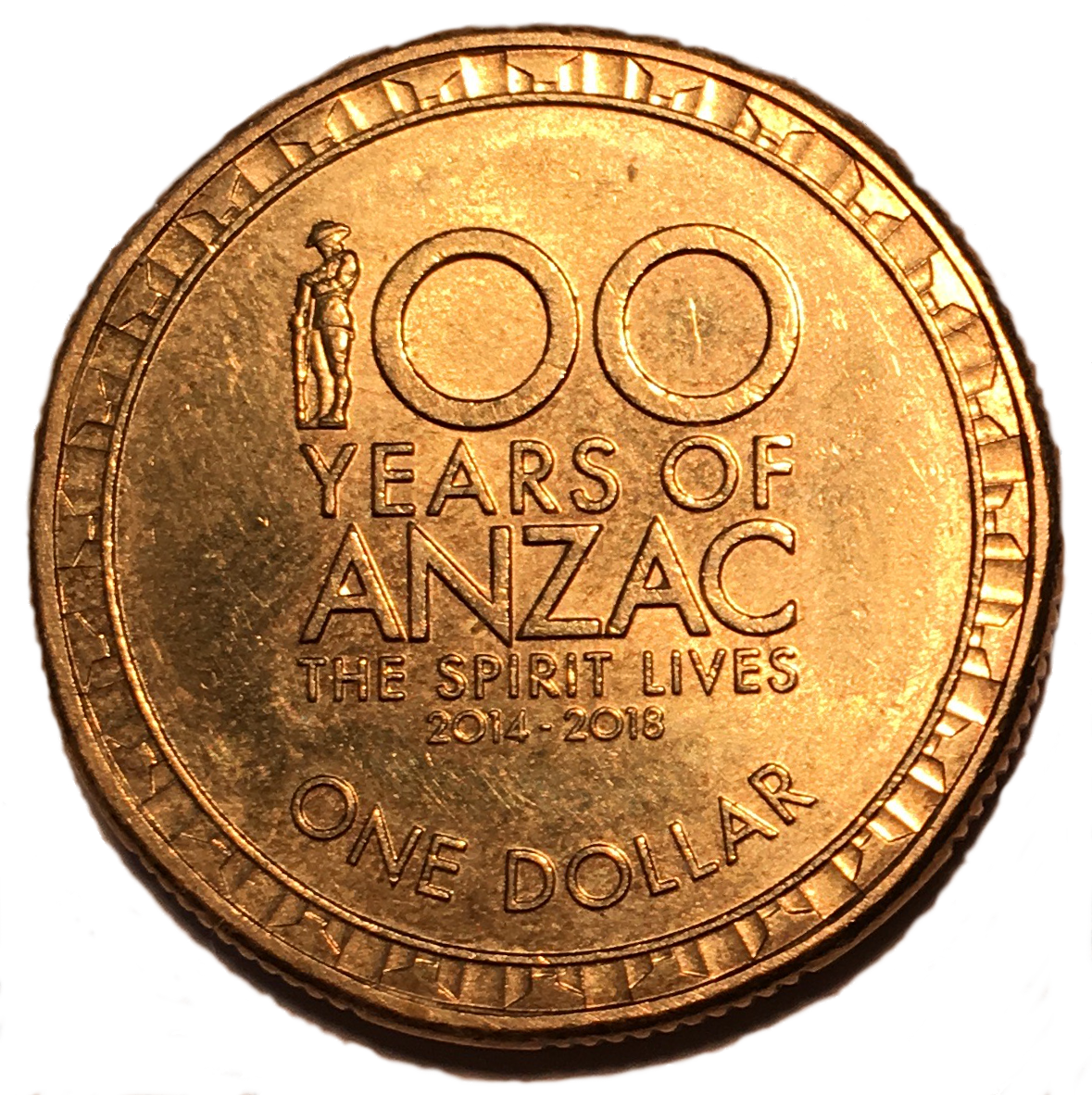
Australia marked the 100th anniversary of the battle at Gallipoli, involving as it did so many Australian and New Zealand troops, in part by producing a special issue of the one dollar coin, seen here. Note that many of these troops will have come from Britain originally.
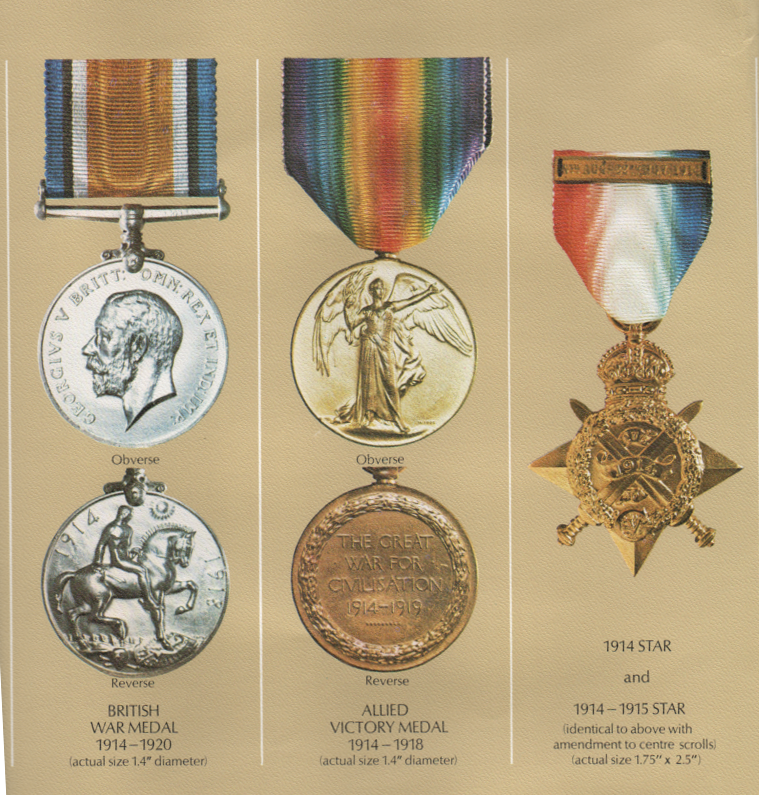
Medals Awarded:
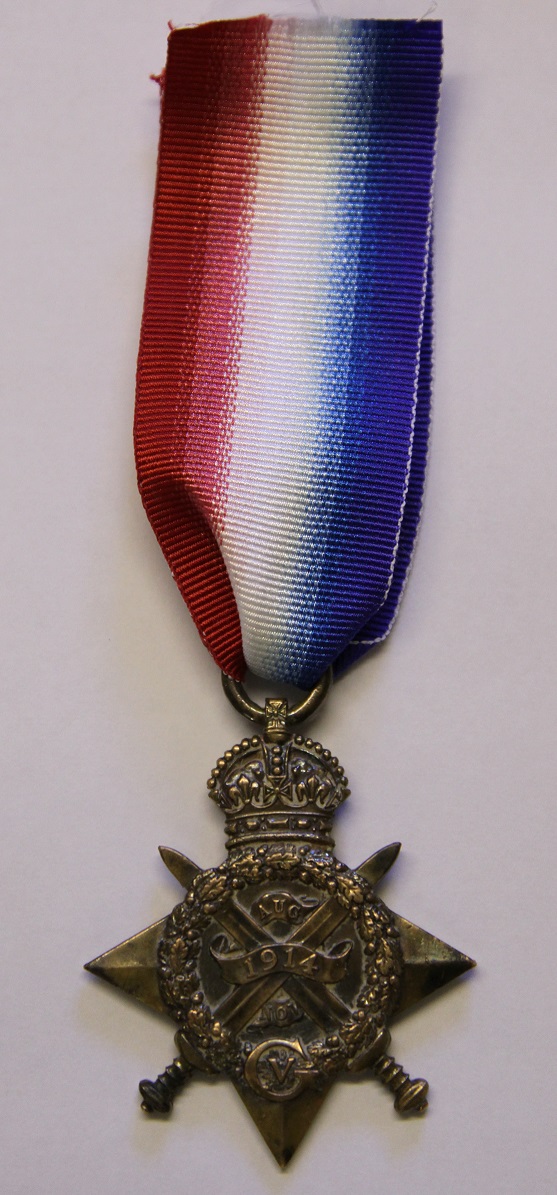
- 1914/15 Star: awarded to servicemen who saw active service before 22 November 1914
- Victory Medal: also called "Allied Victory Medal' and awarded to all who received the 1914 Star or 1914/15 Star and, with certain exceptions, to those who received the British War Medal
- British War Medal: the medal was issued for war services between 5th August 1914 and 11th November 1918. The medal was automatically awarded in the event of death on active service before the completion of this period
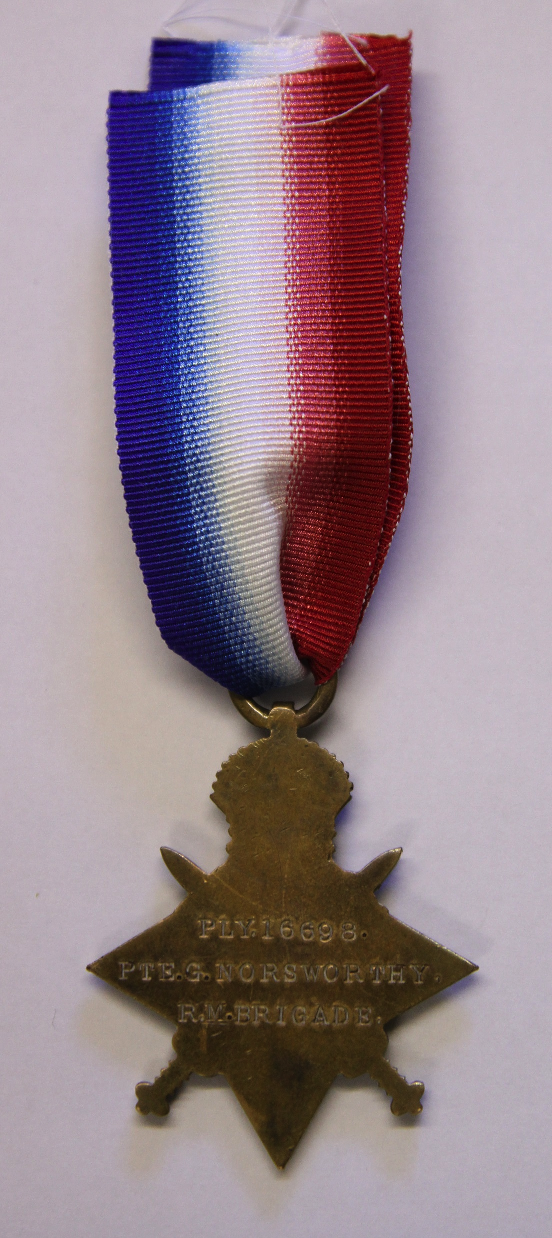
Picture of George Nosworthy's actual 1914/15 Star (Front and Back)
Note the spelling mistake in George's surname. One theory is that this was caused by a misinterpretation of George's strong Devonshire accent, but who knows.
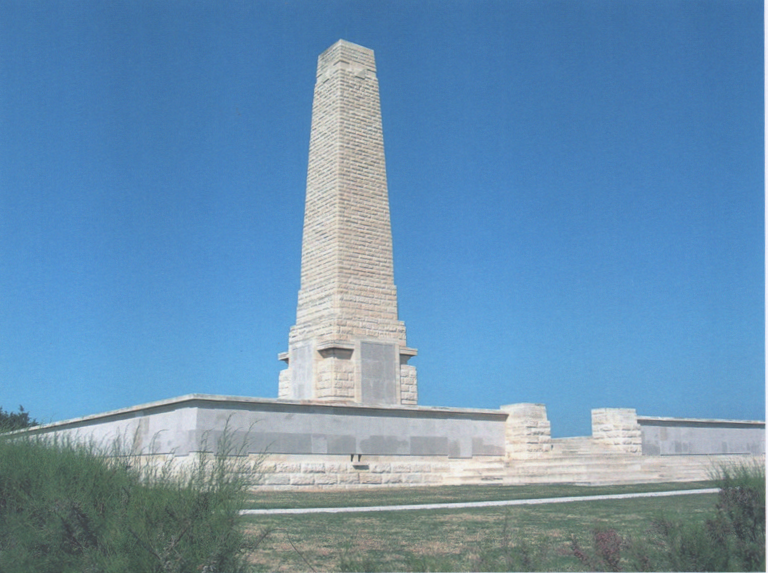
Memorial to Private G Nosworthy
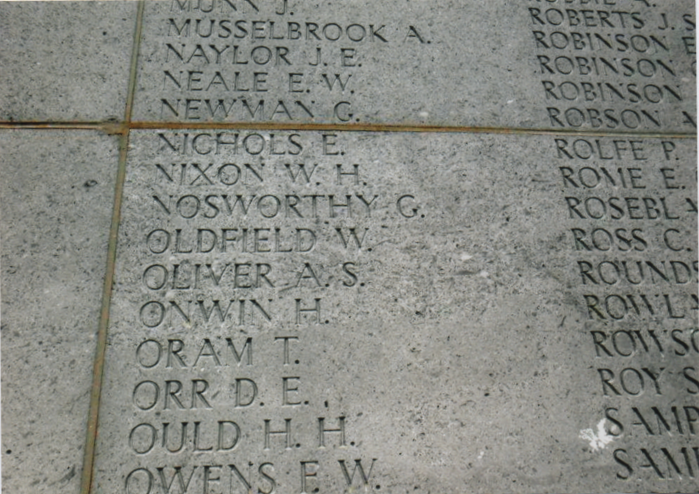
(source Commonwealth War Graves Commission)
Rank: Private
Service No: PLY/16698
Date of Death: 13/07/1915
Regiment/Service: Royal Marine Light Infantry, Plymouth Battalion RN Div.
Panel Reference: Panel 2 to 7
Memorial: HELLES MEMORIAL
This panel is contained within the Helles Memorial which stands on the tip of the Gallipoli Peninsula. It takes the form of an obelisk over 30 metres high that can be seen by ships passing through the Dardanelles.